
Ninth Circuit Applies Common Carrier Exception to Bar Strict Liability Claims Against Rail Carrier
Introduction
In Wells v. BNSF Railway Company, the U.S. Court of Appeals for the Ninth Circuit reversed a Montana federal jury verdict that had imposed strict liability on a rail carrier for asbestos exposure arising from decades‑old vermiculite shipments. The court held that Montana’s common carrier exception to strict liability shields railroads from abnormally dangerous activity claims when the alleged harm arises from transportation performed pursuant to a federally mandated public duty.
The decision underscores the breadth of the common carrier exception under Montana law and clarifies that the exception extends beyond the act of hauling freight to encompass related transportation activities, including handling and conditions that arise during transit.
Background
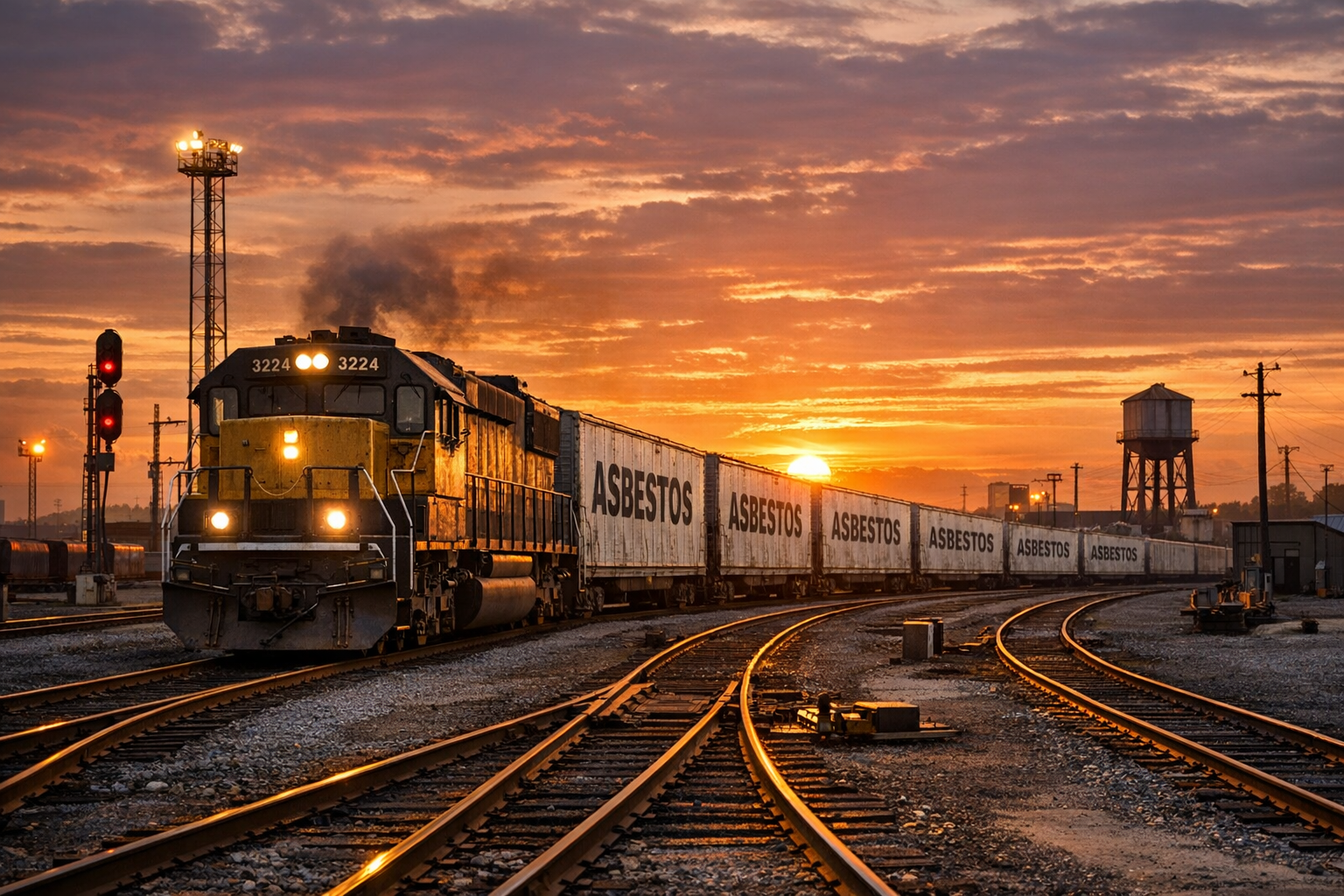
From the 1920s through 1990, asbestos‑containing vermiculite was mined near Libby, Montana and shipped nationwide. BNSF Railway Company was required by federal law to accept and transport this material as a rail common carrier. Over time, asbestos dust escaped from railcars during transport and switching operations and accumulated along tracks and within the Libby railyard.
Former Libby residents later developed mesothelioma and, through their estates, brought negligence and strict liability claims against BNSF in federal court. After a ten‑day trial, the jury rejected the negligence claims but found BNSF strictly liable, awarding $4 million to each estate. The district court denied BNSF’s post‑trial motions, concluding that the railroad was not entitled to the common carrier exception because it allegedly failed to adequately maintain its railyard. BNSF appealed.
Montana’s Strict Liability Framework and the Common Carrier Exception
Montana follows the Restatement (Second) of Torts framework for abnormally dangerous activities. Under Sections 519 and 520, a defendant may be held strictly liable for harm caused by such activities, regardless of the care exercised.
In BNSF Ry. Co. v. Asbestos Claims Court, the Montana Supreme Court adopted Section 521 of the Restatement, which creates an exception to strict liability when an abnormally dangerous activity is undertaken pursuant to a public duty imposed on a common carrier. The rationale is that it would be unjust to impose strict liability on carriers for transporting materials they are legally required to accept and move.
That Montana decision set the stage for the Ninth Circuit’s analysis in Wells.
The Ninth Circuit’s Analysis

Transportation Activities Interpreted Broadly
The Ninth Circuit concluded that the district court interpreted the common carrier exception too narrowly. The panel emphasized that federal law defines “transportation” to include not only the movement of goods, but also related services such as handling, storage, and delivery. As a result, conditions that arise from those transportation activities fall within the scope of a carrier’s public duty.
Here, the asbestos dust that accumulated in the railyard originated solely from BNSF’s federally mandated transportation of vermiculite. The court rejected the argument that the accumulation of dust transformed the case into a premises‑liability‑type claim separate from transportation.
Distinguishing Voluntary Conduct From Public Duty
The estates argued that BNSF’s alleged failure to clean or remediate the railyard constituted conduct outside its role as a common carrier. The Ninth Circuit disagreed, finding no evidence that BNSF undertook voluntary, non‑transportation activities for its own purposes that contributed to the alleged harm.
Unlike cases in which a carrier engages in discretionary or profit‑driven conduct unrelated to its public duty, the conditions at issue in Wells arose directly from transportation activities that federal law required BNSF to perform.
No Need for Certification to the Montana Supreme Court
The plaintiffs urged the Ninth Circuit to certify questions regarding the scope of the common carrier exception to the Montana Supreme Court. The panel declined, concluding that existing Montana precedent—particularly BNSF Ry. Co. v. Asbestos Claims Court—provided sufficient guidance to resolve the issue.
Concurrence Emphasizing Federal Preemption
In a concurring opinion, Judge Callahan agreed with the application of the common carrier exception but wrote separately to emphasize that the Interstate Commerce Commission Termination Act (ICCTA) independently preempts state strict liability claims that would regulate rail transportation. The majority did not reach the preemption issue, resolving the case on state law grounds alone.
Practical Implications
The Wells decision reinforces several points of practical importance for railroads and other regulated carriers:
Broad protection under the common carrier exception. Courts may view transportation duties expansively, encompassing conditions that arise during handling and transit, not just the movement of railcars.
Limits on strict liability theories. Plaintiffs may face significant hurdles in pursuing strict liability claims when alleged harms stem from activities carriers are legally obligated to perform.
Continued viability of negligence claims. The decision does not insulate carriers from negligence liability; the jury’s rejection of negligence claims in Wells was critical to the outcome.
Potential role of federal preemption. Although not reached by the majority, ICCTA preemption remains a potential additional defense to state law claims targeting rail transportation.
For in‑house counsel and regulated entities, the ruling provides further clarity on how courts may analyze strict liability claims at the intersection of state tort law and federally mandated transportation duties.